Preface
Looking back, BBA was once synonymous with luxury cars, especially Mercedes-Benz, which could be considered a symbol of status. However, nowadays, one can acquire a Mercedes-Benz for as low as 150,000 yuan, which makes it seem as if "luxury cars" are nothing special.
In addition to Mercedes-Benz, Audi and BMW have also lowered their prices, all in an effort to maintain their positions in the Chinese market. Yet, even with these price reductions, their popularity has significantly diminished.
So, what has happened to these German luxury cars in the Chinese market? Why do their prices drop by hundreds of thousands of yuan when they do?
The "Winter" of the Luxury Car Market
The ancient saying "Thirty years east of the river, thirty years west of the river" aptly describes the current state of the luxury car market.
Once untouchable, BBA (Mercedes-Benz, BMW, Audi) now have no choice but to bow their heads in defeat, facing the strong rise of domestic cars.
In the first quarter of 2024, Mercedes-Benz's global sales totaled 568,400 units, a year-on-year decrease of 8%, a figure that could be described as "ugly," especially its sales in the Chinese market, which are even more dismal.
In the world's largest automobile market, Mercedes-Benz's sales were only 176,600 units, a year-on-year plummet of 12%. It's important to note that the Chinese market has always been Mercedes-Benz's "money bag," but now it has become the biggest "pain point."
Apart from Mercedes-Benz, the situations of Audi and BMW are not much better either.Do you still remember when BMW confidently declared that it would not engage in price wars, with an attitude of disdain as if it truly considered itself a "high mountain flower"?
But now, BMW is the one that is most enjoying the price war.
In addition, Audi's four rings used to have a very arrogant attitude, but now, facing what can be said to be a saturated Chinese market, even the most arrogant cannot afford to be arrogant anymore.
If you had told the BBA (Bavarian Motor Works, Benz, and Audi) ten years ago what kind of difficulties they would face today, they would have laughed at your wishful thinking, but the reality is that their difficulties are far greater than imagined.
In recent years, new energy vehicle manufacturers represented by NIO, XPeng, and Li Auto, as well as traditional automakers like BYD and Great Wall, have been rapidly encroaching on the luxury car market share.
They not only have a more advantageous price, but their performance in intelligence and electrification is also not inferior, and even surpasses traditional luxury brands in some aspects.
These highlights have attracted the Chinese public, and under the influence of patriotic sentiment, more and more people are beginning to support domestic cars. Even in the overseas market, our Chinese automakers are still performing well.
In addition, what makes BBA even more troubled is that they are clearly lagging behind in the transformation to electrification.
Faced with such a severe situation, BBA has no choice but to adopt price reduction strategies to maintain market share, but this approach is no different from drinking poison to quench thirst.The Dilemma of German Luxury Car Brands
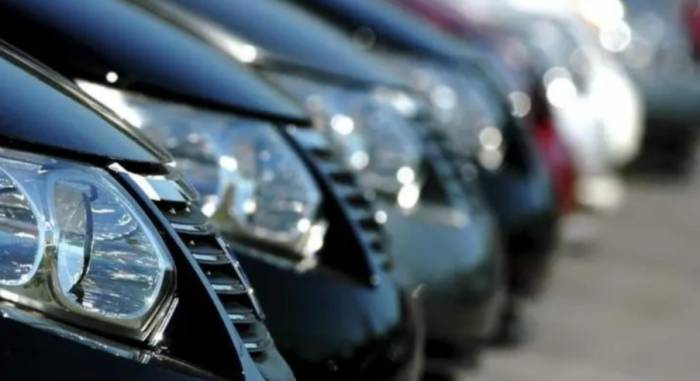
Nowadays, the terminal discount range for several main models of BMW has already broken through the sky, with a price drop ranging from 100,000 to 300,000 yuan. Taking the BMW i3 as an example, its discount range has exceeded 150,000 yuan.
What does this mean? It means that in some markets, the actual selling price of a BMW i3 has fallen into the 200,000 yuan range. You should know that this is the "BMW" that was once unattainable.
So why is BMW doing this? The answer is simple: if they don't do this, they won't be able to sell.
To put it bluntly, the price war is a "lose-lose" situation. If you're willing to take a gamble, there might be a glimmer of hope, but if you don't even try, you will definitely be eliminated by the overall trend.
And it is precisely because BMW understands this principle that they have decided to re-enter the market and join the price war.
Because of their actions, we begin to consider a question: whether German luxury cars still have a chance to turn things around in the Chinese market? The answer is definitely yes, but whether it will be easy or not is uncertain.
The rise of domestic cars has brought down the prices of these luxury cars that ordinary people once dared not even think about, giving more families the opportunity to choose to experience them.
On the other hand, these German brands will not completely withdraw from the Chinese market, after all, they have been deeply involved here for a long time and still have many loyal fans.
However, it's important to note that the entry of foreign car companies is not all bad. After all, the Chinese car industry needs a certain degree of balance in some aspects, which is conducive to the development of the market environment.Of course, the environment of the Chinese market has undergone a dramatic transformation. As for whether foreign car manufacturers can adapt and make changes quickly, it depends on their own awareness.
So, let's focus on Mercedes-Benz, the "class representative" among luxury cars. Is its predicament more severe than that of BMW and Audi?
The drastic price drop of Mercedes-Benz
The once unattainable Mercedes-Benz A-Class can now be purchased for 150,000 yuan. A few years ago, even the sales staff of Mercedes-Benz would not have dared to imagine such a price.
Some consumers joked, "Is this a Mercedes-Benz? I thought I was buying a Volkswagen!" Although this statement is somewhat exaggerated, it vividly describes the extent of Mercedes-Benz's price reduction craziness.
In addition to the A-Class, other models of Mercedes-Benz have also staged a "跳楼大甩卖" (massive clearance sale). The price reduction of the EQC model has reached as high as 400,000 yuan, and the EQE model has also been reduced by 220,000 yuan.
It can be seen that Mercedes-Benz, once a star, is now retreating step by step in order to survive in the Chinese market, even becoming the "class representative" in the price war.
However, the impact of price reduction is multifaceted, but for new consumers, this is undoubtedly good news.
As I just mentioned, their price reduction has also brought opportunities for ordinary families to experience it. Some consumers excitedly said, "Finally, I can fulfill my 'Mercedes-Benz dream'!"But for long-time car owners, this is a heavy blow. An unhappy long-time car owner said, "My car has not been driven warm yet, and it has depreciated by hundreds of thousands. How can I bear this?"
What is more worth paying attention to is that Mercedes-Benz's price reduction strategy has had a huge impact on the entire luxury car market. Some experts pointed out, "Mercedes-Benz's price reduction is like throwing a huge stone into a calm lake, and the ripples caused will affect the entire industry."
Indeed, Mercedes-Benz's price reduction has triggered a chain reaction. BMW, Audi, and other luxury brands also have to follow suit in reducing prices to maintain market share.
It is not difficult to see that this luxury car "price war" has become a "prisoner's dilemma": no one wants to reduce prices, but they have to reduce prices.
However, can price reduction really solve the problem? I'm afraid not.
Mercedes-Benz's new strategy in the Chinese market
The ancient saying "nothing ventured, nothing gained" is very suitable to describe Mercedes-Benz's current situation. Faced with the severe challenges in the Chinese market, Mercedes-Benz did not sit idly by, but chose to break the boat and sink the ship, and formulated a new "Chinese characteristic" market strategy.
In September this year, Mercedes-Benz plans to invest more than 14 billion yuan with Chinese partners to further enrich the product line in China, which shows that Mercedes-Benz still attaches great importance to the Chinese market.
Mercedes-Benz's new strategy mainly includes two aspects:Firstly, two new platforms are being launched, including the MMA and VAN.EA electrified platforms. Secondly, starting from 2025, multiple China-exclusive models will be introduced, including the pure electric long-wheelbase CLA and a luxury pure electric MPV.
In addition to this, Mercedes-Benz is increasing its investment in electrification and intelligence technology innovation. It is reported that Mercedes-Benz plans to achieve 50% of its sales from new energy vehicles by 2025. At the same time, Mercedes-Benz is actively developing autonomous driving technology, hoping to catch up in this field.
In terms of brand reshaping, Mercedes-Benz is trying out some new marketing methods. For example, executives from Mercedes-Benz are beginning to participate frequently in live broadcasts to create personal IPs. Although this approach may seem a bit "down-to-earth," it shows Mercedes-Benz's determination to adapt to the new market environment. However, whether these efforts will be effective depends on consumer reactions.
As for whether it can rise again in the Chinese market, the answer still needs to be tested by time. But one thing is certain: this transformation in the luxury car market has not only changed Mercedes-Benz but is also reshaping the entire automotive industry landscape.
In conclusion, looking at Mercedes-Benz's ups and downs in the Chinese market, we see not only the rise and fall of a brand but also the reshaping of the entire automotive industry landscape. Whether it is Mercedes-Benz or other brands, as long as they can keep pace with the times and be brave in innovation, they will definitely find their place in this transformation.





















Leave a Comment