The latest data from the China Passenger Car Association on March 22 shows that from March 1-19, the retail sales of passenger cars reached 700,000 units, a year-on-year decrease of 8%. The cumulative retail sales for the year so far stand at 3.379 million units, a year-on-year decrease of 18%. Nationwide, passenger car manufacturers' wholesale sales amounted to 746,000 units, a year-on-year decrease of 13%, with a cumulative wholesale of 3.812 million units for the year, a year-on-year decrease of 15%.
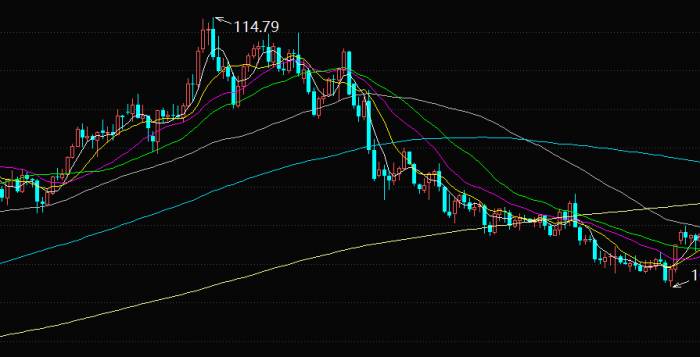
The automotive industry is facing growing pains, which were somewhat anticipated. In terms of domestic consumption, the complete withdrawal of subsidies for new energy vehicles may be a significant variable. The stock market has been quick to react, with individual stocks in the automotive sector experiencing a noticeable correction that has significantly dragged down the index.
Is the market being overly pessimistic?
After all, with the relaxation of COVID-19 restrictions, 2023 was expected to be a year of robust consumption. The first quarter has been significantly influenced by consumer psychology due to the subsidy phase-out, but once April arrives, the industry may have considerable room for recovery in the second quarter of this year, thanks to the low base of last year.
Another issue that cannot be ignored is the impact of the global macro environment on automotive consumption, which in turn affects China's automotive exports. In 2022, China's automotive exports reached 3.4 million units, surpassing Germany for the first time to become the world's second-largest exporter.
This means that the overall development status of China's automotive industry still requires our careful review.
For China's automotive industry, 2009 was a significant turning point. In that year, China's automotive sales exceeded 13.5 million units, with a year-on-year growth of over 40%, successfully shaking off the impact of the 2008 global financial crisis and surpassing the United States to become the world's largest automotive consumer.
Even more encouraging was the subsequent nine consecutive years of growth in China's automotive sales. In 2017, China's automotive sales reached 28.879 million units, a year-on-year increase of 3%, setting a new historical record.
The turning point occurred in 2018 when China's automotive sales amounted to 28.08 million units, a year-on-year decrease of 2.76%, ending the nine-year growth streak. The fundamental reason was the rise of American protectionism that year, and the trade war clearly affected consumer confidence.After nine consecutive increases, China's automobile sales have experienced a three-year decline in 2018, 2019, and 2020, with a continuous drop in sales. From a macro perspective, the impact of the trade war has not yet ended, and the COVID-19 pandemic has once again had a significant impact.
What is commendable is that during the three years of the COVID-19 pandemic, in 2021 and 2022, China's automobile production and sales welcomed two consecutive increases, with sales reaching 26.275 million and 26.864 million vehicles, respectively, over the two years.
Attentive friends will not find it difficult to notice that even with two consecutive increases, the sales volume in 2022 is far from catching up with the peak sales volume during the period of 2017.
Therefore, attributing the decline in automobile sales in 2023 to the cancellation of new energy subsidies has some merit, after all, the main force behind the two consecutive years of growth has been new energy vehicles, not traditional vehicles. Of course, there are also issues with this statement.
At the beginning of the year, the domestic automobile price reduction and promotion efforts have been very large, with price reductions comparable to subsidies, as if they have not yet been able to reverse the downward trend in sales. What's going on?
Firstly, the initial price reduction may have affected sales. Some enterprises took the lead in reducing prices and promoting, which instead led consumers to wait for the price reduction of their favorite brand's cars. There must be a time difference, and the decline in sales volume in the first quarter is directly related to this;
Secondly, the relaxation of the pandemic control has not constituted a direct benefit for the automobile industry, because public transportation has become more convenient, and some consumers' willingness to buy cars is no longer so urgent.
Lastly, as the Federal Reserve's interest rate hikes approach their end, coupled with the bankruptcy of several banks in the United States, international consumers' confidence in consumption is insufficient at this time. The growth in China's automobile industry sales in 2021 and 2022 is related to the consumption-driven large-scale monetary policy abroad.
Looking at the basic situation of China's automobile market, the sales peak in 2017 has not been surpassed for more than five years, which means that China's automobile industry has shifted from an incremental market to a stock market. It is obviously unrealistic to continue to pursue the continuous growth of total automobile sales. Of course, there will also be hot spots in some areas. New energy vehicles and smart cars are reshaping and subverting the market.
In the medium term, combined with the global macro economy, the probability of the automobile industry experiencing another round of pain in 2023 has increased. The world situation is complex, and whether the world can fully recover in 2024 still needs to be questioned. The automobile industry is closely linked to the global macro situation.























Leave a Comment