At 10 a.m. on Saturday, the Minister of Finance, Lan Fu'an, attended a press conference held by the State Council Information Office, introducing "Increasing the Counter-Cyclical Adjustment of Fiscal Policy and Promoting High-Quality Economic Development."
The market places great importance on this conference, especially after the information revealed at the press conference led by the National Development and Reform Commission on October 8th was relatively "empty," everyone wants to know how much incremental fiscal funds will enter the real economy. During the holiday, there have already been quite a few "small compositions," with some saying 2-3 trillion yuan, and others saying 10 trillion yuan, each with a more exaggerated tone than the last.
After watching the entire press conference, those who are concerned about specific numbers may be disappointed. Even when reporters explicitly asked the Ministry of Finance leaders about the scale of this round of incremental fiscal funds and how much leverage space there is in central finance, Minister Lan Fu'an still did not disclose specific numbers, only mentioning that central finance still has a relatively large debt space and deficit increase space.
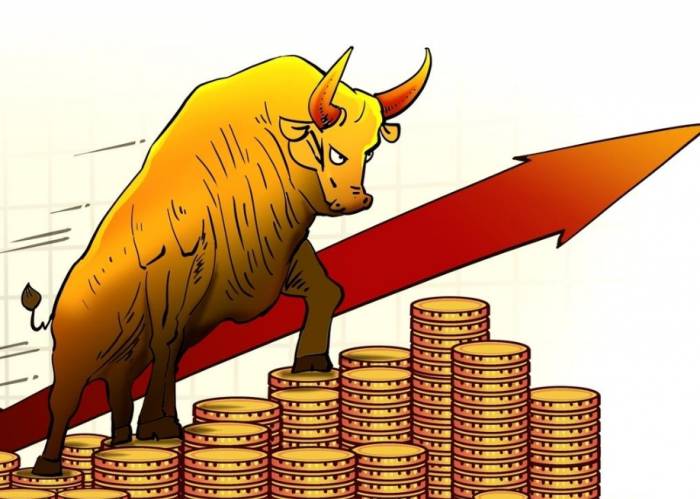
The reason for not disclosing specific numbers may be to prevent the capital market from going crazy again after the release of incremental policies. It can be seen that what the higher-ups want is a "slow bull" and a "long bull," not a "crazy bull." From the perspective of boosting the stock market, the big moves of the Ministry of Finance seem to be less than expected, and the capital market benefits are limited.
However, this does not mean that the content of this press conference is unremarkable. On the contrary, we see that fiscal resources support the real economy with a relatively large force, playing a key role in resolving the biggest risks in China's economy at present.
What is the biggest risk at present? There are two, one is the local government debt issue, and the other is the continuous decline in the real estate market.
First, let's talk about debt resolution. As we all know, the scale and leverage ratio of our country's national debt are not large, local government debt is the main part, especially the local government's implicit debt, which is mainly composed of urban investment bonds issued by local financing and investment platforms, with a large scale and certain risks, making debt resolution important and urgent.
In recent years, the country has put a lot of effort into debt resolution. According to Minister Lan Fu'an's introduction, by the end of 2023, the implicit debt included in the national government debt information platform nationwide has decreased by 50% compared to the baseline in 2018.
Where has the implicit debt gone? A large part of it has been replaced by special refinancing bonds issued by local governments and national bonds issued by the central government, which has achieved good results.The Ministry of Finance, seeing the effectiveness of the strategy, continued to employ it, indicating a readiness to increase the debt limit in one go on a larger scale to replace local implicit debt, supplementing local government comprehensive financial resources by 400 billion yuan, allowing localities to free up more energy and financial resources for development.
With the new policy叠加叠加 already implemented old measures, it can be basically determined that the issue of local implicit debt in the vast majority of regions in our country is stable, and the risks have been significantly reduced.
After talking about local debt, let's talk about real estate. In my view, the incremental policy helps the real estate market more.
The Central Political Bureau meeting held in September was the first time the phrase "promote the real estate market to stop falling and stabilize" appeared, indicating that one of the key tasks for various departments in the future will revolve around stopping the real estate market from falling and stabilizing. The Ministry of Finance is naturally no exception.
Deputy Minister Liao Min proposed two new measures to stabilize the real estate market. One is to allow the use of special bonds to purchase idle land; the other is to support the use of special bonds to purchase existing housing as affordable housing.
Both new policies involve special bonds, which are different from ordinary bonds. Special bonds are generally "fixed income and fixed expenditure". The purpose of issuing bonds is to build specific projects, such as highways, water conservancy projects and other infrastructure, which were not allowed to be used in projects related to real estate before.
Many real estate companies in danger have tight liquidity, with no cash on hand but idle land and houses, but they are struggling to sell. The country encourages local governments to repurchase land that has not yet been built and purchase housing that real estate companies have developed as affordable housing sources. This can not only reduce inventory but also provide liquidity to real estate companies, ultimately achieving the effect of stopping the real estate market from falling and stabilizing.
The idea is good, but the problem is that purchasing land and housing requires money. Local finances are already relatively tight, where can there be additional funds? Now there is, the Ministry of Finance allows localities to use special bonds to repurchase land and purchase existing housing that has been built and is for sale, thus adding a fund that could not be used before.
In my view, the essence of this new measure is to allow some of the money originally invested in infrastructure to enter the real estate market, which is a typical increment of funds and actual purchasing power.
Who do you think will be the biggest beneficiary? Obviously, it is the real estate companies. Idle land and unsold houses on the books can be cashed, the overall liquidity of assets can be enhanced, and the money can be used for "ensuring delivery of buildings", repaying debts to suppliers, repaying bank loans, etc. The decline in debt ratio will make the lives of real estate companies much better, and they are the biggest "winners" of this round of fiscal incremental policies.Additionally, investors holding real estate company stocks may be among the few beneficiaries after the press conference. There are numerous listed real estate companies in both the A-share and Hong Kong stock markets, and the positive impact is likely to be directly reflected in the stock prices on next Monday.
For stock investors, the most important thing is whether the stocks they hold can rise. However, decision-makers need to consider more factors. The real economy is always the top priority, with finance and capital markets playing a supporting role, because China's economy is based on physical manufacturing.
Therefore, the incremental policy announced by the Ministry of Finance cannot be considered disappointing. The key is that it mentioned focusing on resolving the two biggest potential risks in the current economy. Only when risks are eliminated can the economy develop healthily, and confidence will naturally return, right? As for how the capital market views this and whether it can understand the strategic planning of the higher-ups, we will see the result on Monday.





















Leave a Comment