On February 24th, at 8 PM Beijing time, the three major European stock indices were all experiencing significant declines. The UK's FTSE 100 index fell by 1.98%, Germany's DAX 30 index plummeted by 2.6%, and France's CAC 40 dropped by 2.48%.
In terms of news, the Bank of England announced on Thursday a 25 basis point interest rate hike, which the market interpreted as neutral, with expectations that it is highly likely to continue following the Federal Reserve's interest rate hikes in May; on March 24th, the European Central Bank's Governing Council member Nagel's statement somewhat dampened the market, saying, "We have not yet won the battle against inflation, and we welcome an accelerated pace of quantitative tightening in the third quarter."
Naturally, the retesting of the lows by the three major European stock indices was caused by a variety of factors.
In the evening, the US Dollar Index began to surge significantly. A strong US dollar is undoubtedly a significant variable that hits European stock markets and could affect Asian stock markets on the following Monday.
On March 23rd local time, US Treasury Secretary Yellen stated during a Congressional House hearing that the government is ready to take additional measures to protect the safety of depositors.
I believe this is the fundamental reason for the US Dollar Index to strengthen again on March 24th Beijing time.
Yellen's statement also implies that the run on riskier small and medium-sized banks in the United States may have essentially come to an end, with the market moving from panic to calm once again, and rationality taking the upper hand.
Next, let's look at the trend of the US Dollar Index. On March 9th, two US banks experienced a blowout, and Silicon Valley Bank subsequently faced a run, with market panic spreading. The stance of mainstream US institutions, represented by Goldman Sachs, began to change, no longer expecting the Federal Reserve to continue raising interest rates in March.
That is to say, as the interest rate hike approached, expectations suddenly changed.The US Dollar Index turned weak and then, pierced the short-term upward channel, initiating a secondary bottoming-out trend. We have all witnessed what happened next; the Federal Reserve did not stop raising interest rates due to bank bankruptcy events.
This means that since March 9th, the decline of the US Dollar Index this time was clearly a mistake!
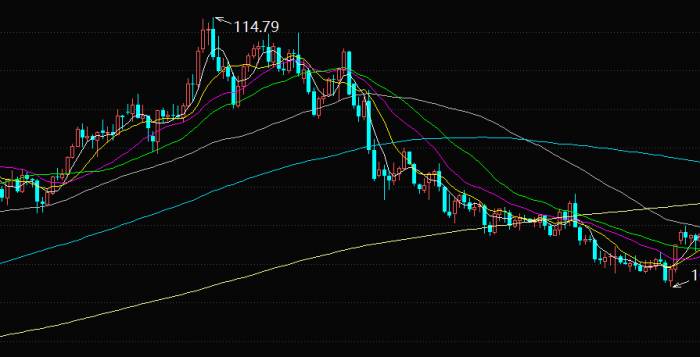
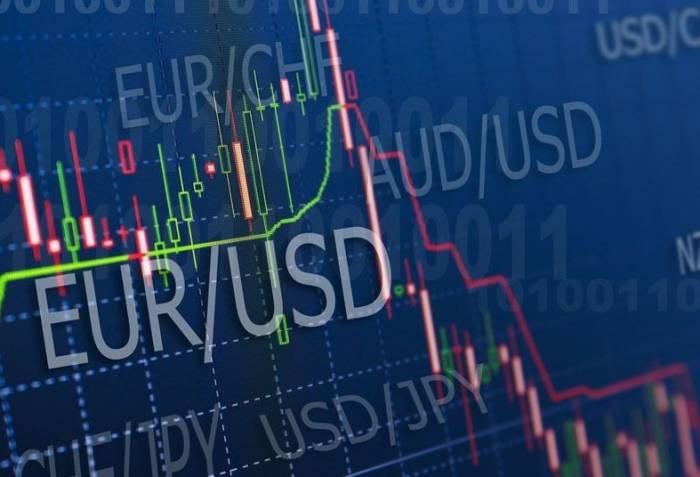
With further statements from Yellen, the US Dollar Index that was still trading on March 24th has essentially formed a Morning Star technical candlestick pattern, coupled with not breaking through the low position in early February, the probability of the US Dollar Index successfully bottoming out for the second time has increased.
This means that the US Dollar Index is likely to return to the upward channel again, and the US Dollar may very well initiate a new wave of appreciation.
Especially at this position, the appreciation of the US Dollar is not really scary, after all, A-shares are at a low position, but if the appreciation is too rapid, it can still impact the market.
Of course, the next moves of the United States are still very much worth our vigilance.
There is one in early May for interest rate hikes, and one in June for raising the debt ceiling.
As Yellen said, if the United States defaults on its debt, it will weaken the international reserve status of the US Dollar, and not raising the debt ceiling will lead to a recession or worse.
The ever-expanding debt problem of the US federal government seems to have fallen into a "solved" situation, the incompetent US government can only keep raising debt, but is powerless to reduce its national debt.
The current round of interest rate hikes by the Federal Reserve has undoubtedly increased the burden on the US federal government, they must pay more interest, although Americans are adept at "not being burdened by debt" and printing money. However, making the whole world pay the bill is indeed detestable.Of course, we don't need to be overly concerned about the U.S. debt issue. Once this bubble bursts, it will directly affect the status of the dollar's hegemony and may directly lead to the decline of the United States.
For now, the Biden administration can still maintain the face of the United States as a superpower, and national credit is the underlying logic that determines whether U.S. debt will collapse.
It is too early to discuss this issue at present. The Ukraine crisis has given the United States another lease on life.
In the medium term, even if the last interest rate hike by the Federal Reserve in May ends, the U.S. dollar index has not weakened. It is likely to be an important turning point when the Federal Reserve turns to interest rate hikes in 2024.
This means that although it seems that the Federal Reserve's interest rate hikes are nearing an end, the power of the "Indian summer" is still there. For A-shares, despite many positive factors in 2023, they are still suppressed by the international environment. It is worth noting that recently, stocks with no relation to fundamentals may have already approached their peak.












Leave a Comment