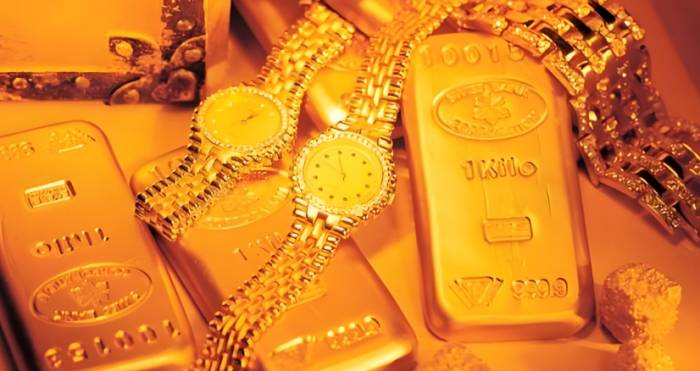
In the heart of Europe, there lies a place that captivates the hearts of jewelry enthusiasts worldwide—Antwerp, Belgium. This ancient city, known as the "City of Diamonds," has been the world's most famous diamond processing and trading center since the 19th century and remains the starting point for countless diamonds to shine brightly.
Upon disembarking at Antwerp Central Station, the nearby roads are relatively narrow, accommodating only pedestrians and bicycles. Along the roads are shops lined up one after another, with the occasional cyclist passing by. As the bicycle wheels bounce on the cobblestones, they leave behind a lingering echo.
If you think Antwerp is a quiet small town, you might be somewhat biased. In fact, not only is commercial trade thriving here, but it is also one of the most densely populated cities in Europe. As the second-largest city in Belgium, Antwerp covers an area of only 140 square kilometers with a population of about 500,000 people, making its population density quite astonishing.
Behind this is the prosperous development of the diamond industry, which has attracted a large population to come to this city to live and work. On the seemingly ordinary "Diamond Street"—Hoveniersstraat, which is only a few hundred meters long, there are 1,700 diamond companies and 4,500 diamond dealers gathered. According to statistics, the thriving diamond industry has created 6,600 direct jobs and 26,000 indirect jobs, with practitioners from more than 70 countries and regions working here every day. Data from the Antwerp World Diamond Centre (AWDC) shows that Antwerp's annual diamond trading volume reaches tens of billions of dollars, with its diamond export volume accounting for 5% of Belgium's total exports and 15% of exports outside the EU, making it an important driver of Belgium's economic development.
Why has Antwerp become the "City of Diamonds"? This is not only due to its superior geographical location adjacent to the port but also inseparable from the local standardized and secure trading environment. As early as 1447, the mayor of Antwerp stipulated by decree, "It is forbidden to buy, sell, mortgage, or transfer any counterfeit diamonds, rubies, emeralds, and sapphires in Antwerp." This decree demonstrated the determination of the city's managers at the time to maintain market integrity and won the trust of many diamond practitioners.
In addition, the local continuous tax-free policy has greatly promoted the vigorous development of its diamond industry. For a long time, almost all industry elites worldwide have actively or passively moved their corporate headquarters here, and designers, craftsmen, and traders have also gathered here. They brought huge wealth and rich business experience, helping Antwerp reach the peak of the diamond industry. Data shows that in 1950, there were only four large-scale, cross-regional diamond trading centers in the world, all four of which were located in Antwerp.
Antwerp, with its first-mover advantage, is undoubtedly fortunate, but its continued brilliance comes from its pursuit of excellence in diamond processing.
In the entire diamond industry, the "Antwerp Cut" is a synonym for perfect processing. This craft has been passed down for six centuries, and it can precisely cut out 57 facets, with 33 on the top and 24 on the bottom. Since each facet can capture light, diamonds processed by this cutting method appear more dazzling, hence they are also called the "perfect appearance" of diamonds. The "Antwerp Cut" is not only a reflection of the pursuit of excellence but also a process of achieving high added value. As early as the Middle Ages, people in Antwerp understood that although rough diamonds are precious, the exquisite finished products after cutting will bring higher profits. It is said that a 10-carat rough diamond, after being processed by the "Antwerp Cut," will only be half left, and the other half will turn into powder.
Currently, this technology has become the global standard for diamond cutting, attracting a large amount of diamond processing business. Statistics show that out of every 10 uncut diamonds in the world, 8 are sent here for processing, and 80% of the world's "rough diamonds" and 50% of finished diamonds pass through Antwerp. It can even be said that every diamond in the world for sale, no matter where it will be sold, has been to Antwerp at least once.
The development of Antwerp's diamond industry system to this day is also inseparable from the support of a highly specialized ecosystem, including diamond banks, security and logistics service companies, brokerage agencies, tourism services, and a range of high-end catering and accommodation facilities.The "full-service concept" that is now widely popular in the jewelry industry was born in Antwerp. Many years ago, diamond merchants in Antwerp realized the importance of customer service and took VIP services to a new level. When purchasing diamonds, customers can communicate with the merchant in advance to clarify the type of diamond needed, the approximate weight, and design preferences. Subsequently, the merchant will personally carry a selection of rough diamonds and detailed information to meet the customer at the airport and arrange for free accommodation in a luxury hotel. Customers can leisurely choose their favorite diamonds in a comfortable hotel environment, and then just wait for the merchant to complete all communication work and the workshop to complete all processing procedures.
During this period, many people will choose to travel in Antwerp or surrounding areas to enjoy the beautiful natural scenery; they can also visit the local diamond museum to see the process of ore processing into diamonds, world-famous diamond products, and have the opportunity to watch craftsmen process diamonds on-site. After that, you only need to return to the hotel to try on the finished diamonds. If the size is not suitable after trying on, you can continue to stay in the free hotel and wait for the store to modify it.
However, Antwerp's diamond industry is also facing unprecedented challenges today. On the one hand, Antwerp's previous advantage in diamond raw material supply is related to Belgium's former colonies in Africa. But now this channel is narrowing, making Antwerp gradually fall into a dilemma in diamond sources. On the other hand, the rapid rise of emerging diamond market hubs such as the United Arab Emirates' Dubai and China's Hong Kong has also taken away a large share of the market.
To meet the challenges, Antwerp refocuses on its core advantages and innovates on the "Antwerp cutting method". They not only increased the training of manual cutting craftsmen but also improved the standards of "perfect cutting" and tried to combine traditional craftsmanship with modern technology, striving to continue to lead the development of the global diamond industry with more refined and diverse cutting techniques. At the same time, their "one-stop service" and the beautiful environment of Belgium are still irreplaceable. Even though the global diamond trading centers have expanded to 25, it is believed that Antwerp will still occupy a unique position in the world diamond industry for a long time in the future.






















Leave a Comment