The debt crisis is an issue that all countries around the world will eventually face, but the debt crisis of the U.S. government is the most severe.
Why has the U.S. government fallen into a predicament of overspending? The fundamental reason lies in the over-issuance of U.S. dollars.
It is well known that over the past few decades, Americans have shifted their focus to finance, as the financial industry generates money quickly. In essence, the United States has exploited the so-called dollar hegemony to arbitrarily reap the wealth of other countries.
However, it is important to understand that the so-called dollar hegemony of the United States is now very unstable. On one hand, the U.S. manufacturing industry has become hollowed out, meaning that the dollar has lost its anchor. On the other hand, the world has embarked on a path to de-dollarization.
Since the outbreak of the U.S. subprime mortgage crisis in 2008, the United States has accelerated its debt issuance to offset the crisis, and the scale of U.S. national debt exceeded 10 trillion U.S. dollars that year.
Now, more than ten years have passed, and the scale of U.S. national debt has exceeded 35 trillion U.S. dollars. According to predictions from relevant institutions, by the end of the year, the scale of U.S. national debt may reach 40 trillion U.S. dollars. At that time, the interest that the U.S. government has to pay annually on its national debt will be enough to make it difficult for the U.S. government to catch its breath.
The continuous growth of the U.S. federal government's debt is mainly caused by an aging population, rising healthcare costs, and insufficient tax revenue. Coupled with the fact that new U.S. national debt is difficult to sell, it can be said that the days of the U.S. government are already very difficult.
U.S. debt will inevitably continue to grow because it simply cannot be repaid. The ultimate outcome is that the United States will drag everyone down with it, with a heavy price to pay. In the future, when the U.S. debt bubble is burst, it will not only harm the global economy but also inflict a huge impact on the United States itself.So today we have seen once again that the Federal Reserve intends to continue lowering interest rates, with two more rate cuts expected within 2024.
According to media reports, Mary Daly, President of the Federal Reserve Bank of San Francisco, stated on the 9th that she fully supports the Fed's decision to cut rates by 50 basis points last month, and indicated that if the economy develops as she anticipates, there may be one to two more rate cuts this year.
In an interview with journalists, Daly said, "I do not want to see the labor market slow down further." The 50 basis point rate cut last month was a way to "align policy with the economy." Daly said, "Considering my economic forecast, two more rate cuts this year, or one more rate cut this year, is indeed within the range of possibilities that I think are plausible." Daly also believes that the labor market, with an unemployment rate of 4.1%, is currently at full employment.
Meanwhile, Susan Collins, President of the Federal Reserve Bank of Boston, stated on the 8th that the Fed may need to lower interest rates further, and that the focus of the next phase of monetary policy should be on protecting the U.S. economy.
This statement is similar to what I predicted earlier. I have said before that in the face of the economy, the dollar, and the U.S. stock market, the Fed can only choose one of the three. It is clear that the Fed's first choice is to protect the U.S. economy.
How to put it? The times have changed. The old ways of the United States are no longer viable today. It's like when Britain was the progenitor of finance, and in the end, Britain can also be said to have succeeded and failed due to finance.
The dollar, relying on its monopolistic position, has done things it should not have done. To put it simply, the dollar tide is about eating when it's overdraft and finding ways to make you pay when it's time to repay. And modern economics is used to whitewash. They even tell you that this is the law of economics, you need to learn and believe it.
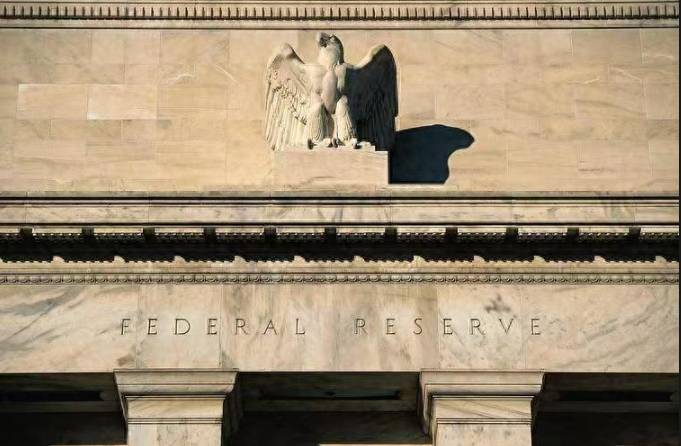
But those who understand can see that the Fed has been playing a data game. To put it bluntly, the Fed has already begun to serve the U.S. government.
Let's look at a set of relevant data from before. In September, the U.S. non-farm employment data surged by 254,000 people, far exceeding expectations. What astonished everyone even more was that not only did September far exceed expectations, but the Americans also revised the data for July and August.Data fabrication, yet no words can describe it. This is precisely what the Federal Reserve is currently doing.
In fact, as early as 2018, the Federal Reserve had played this game before. Let me take you through the situation at that time.
In 2018, there was a statistic for new urban employment, and people worldwide were certain it would be negative. However, the number announced was 45,000, a positive figure. Everyone around the globe criticized it as fake data. Then, three days later, the Federal Reserve issued a statement saying that before the previous statistics were released, there were 150,000 urban workers who couldn't find jobs and had all returned to their hometowns to work in agriculture.
Therefore, there are indeed significant issues with the U.S. economy now, otherwise, the Federal Reserve wouldn't have publicly stated that there would be two more interest rate cuts within this year. I wonder what everyone else thinks about this?



















Leave a Comment