On May 11th, a large area of domestic commodity futures experienced a significant decline, with base metals suffering substantial losses. Shanghai nickel plummeted by 5.36%, iron ore fell by 3.46%, hot-rolled coil dropped by 2.95%, Shanghai copper declined by 2.85%, rebar fell by 2.65%, and Shanghai zinc dipped by 2.08%. It is an undeniable fact that the vast majority of base metal commodity futures are on a continuous downward trajectory.
Naturally, for bulls, there is still a glimmer of positive hope, which lies in the relatively resilient trend of copper futures in the past period. Dr. Copper is considered the barometer of the global economy.
However, the sharp drop in copper futures at the end of Thursday is likely to have dampened the spirits of these individuals, with their psychological defenses on the verge of complete collapse.
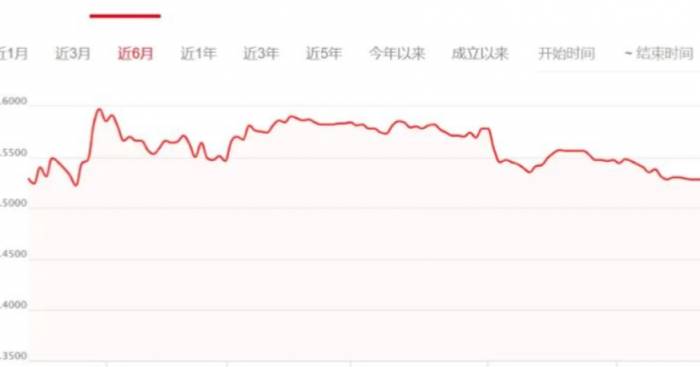
The significant bearish candle for Shanghai copper on May 11th essentially confirmed the downtrend of this cycle. What is particularly alarming is that in the last hour before the market closed, Shanghai copper rapidly dived, with a drop of about 2%.
Such market behavior suggests the emergence of some bearish news. Xian Xian Financial quickly gathered information to probe into the underlying reasons.
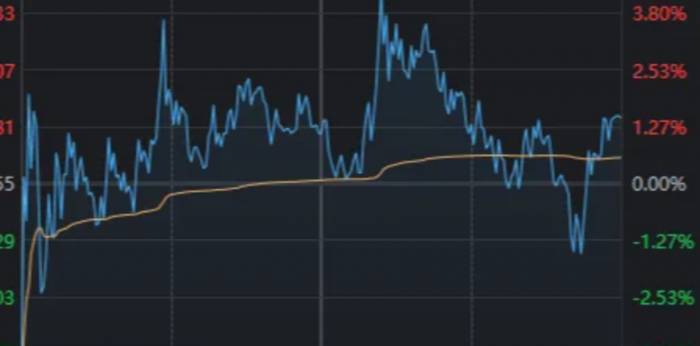
In the afternoon, around two o'clock, the National Bureau of Statistics released the CPI and PPI data for April, which could also be the reason for the weaker performance of the A-share market in the afternoon. The afternoon's performance was far from the morning's momentum.
The CPI for April decreased by 0.1% month-on-month and increased by 0.1% year-on-year. Xian Xian Financial believes this is further evidence of sluggish domestic consumption, indicating that consumer spending in April was not as strong as in March; the year-on-year increase of only 0.1% is noteworthy, considering that in April 2022, due to pandemic control measures, the economy fell into a trough. In a nutshell, looking at the April data, domestic demand is clearly insufficient and far below expectations.
A month-on-month decrease of 0.5% and a year-on-year decrease of 3.6% have completely shattered the psychological defenses of commodity futures investors.
Of course, this is also due to the global commodity prices retreating from high levels due to the Ukraine crisis, and the fact that major commodity prices are accelerating their decline is an undeniable reality.It requires careful contemplation that this might just be an excuse, as the Ukraine crisis is far from over, yet some commodity prices have plummeted to their lowest levels, even lower than before the crisis. If we follow this logic, the world economy in 2023 is significantly weaker than that of 2022, even though 2023 marks the first year of our relaxation of pandemic control measures.
This is sufficient to illustrate that domestic demand stimulation has not been able to offset the impact of global demand insufficiency.
The prices in the non-ferrous metal smelting and rolling industry rose by 0.2%, with copper smelting prices increasing by 0.3% and aluminum smelting prices by 0.1%.
The significant increase in copper smelting prices is indicative of the bargaining power that processing enterprises possess. Ample upstream supply, the midstream struggling to cope, market oversupply, and the beginning of inventory accumulation have all contributed to price declines, which may be the key reason for the late plunge in Shanghai copper prices.
Doctor Copper, as a barometer of the world economy, the new round of declines makes the world economic recession particularly tangible.
The performance of our country's PPI data directly reflects the true state of the world economy. As the world's largest manufacturing country and the largest trading exporter, the decline in raw material commodity prices also means a significant lack of global demand.
It is not an exaggeration to say that, despite the seemingly robust U.S. economic data, the trends in Chinese production and manufacturing, as well as the prices of raw materials, are far more advanced than the U.S. economic data.
In the second half of 2023, the likelihood of the world's major developed economies falling into recession is growing. It is expected that within the next few months, the U.S. economic recession will be reflected in key data.
What lies before us is the need to consider whether this recession will be a mild one or a severe one, as the root cause is in the United States, and our country, as the manufacturing end, is experiencing a passive impact.
This round of economic recession is more complex than any in history. In the past, it was a joint effort by China and the United States to emerge from economic difficulties, with the 2008 financial crisis being a typical example. This time, while the United States is mired in difficulties, it is also continuously engaging in confrontation, casting a shadow over the global economic recovery. This also means that whoever can recover first under the uncertain world economic situation will gain more time.In the second half of 2023, numerous challenges are still anticipated to be faced.



























Leave a Comment