The Central Political Bureau meeting held at the end of July 2024 pointed out that macro policies need to continue to exert force and be more supportive. It is necessary to accelerate the comprehensive implementation of policies and measures that have been determined, and to prepare and introduce a batch of incremental policy measures in a timely manner. Against this background, there has been much discussion and anticipation in the market regarding incremental fiscal and monetary policies. On the morning of September 24, the three major financial regulatory authorities announced a package of financial support policies for high-quality economic development, officially declaring the landing of the first "shoe" - incremental monetary policy.
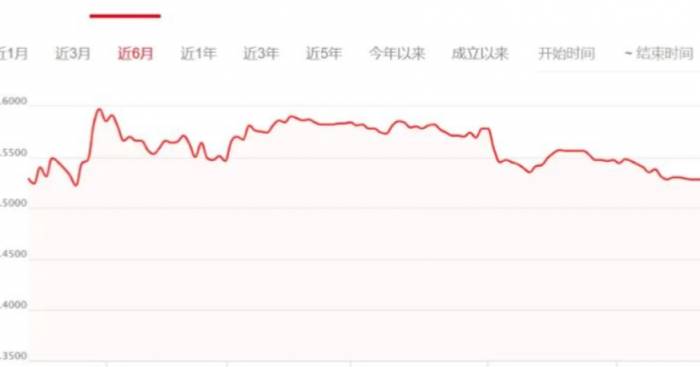
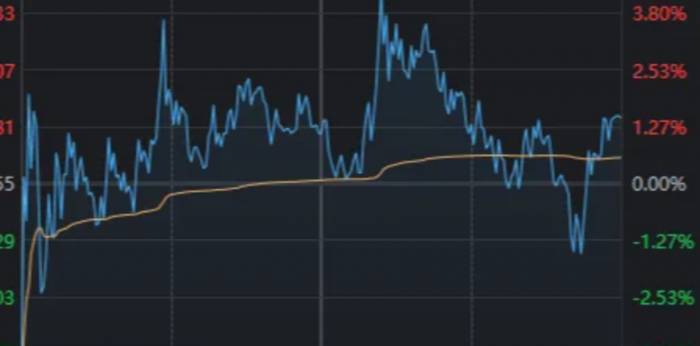
The confidence of domestic and foreign investors has been greatly boosted. Starting from September 24, the stock market has been rising for several days, with the Shanghai Composite Index, Shenzhen Component Index, and Hang Seng Index returning to above 3,000 points, 10,000 points, and 20,000 points respectively. The trading volume of the Shanghai and Shenzhen markets has exceeded one trillion yuan since the 25th. The foreign exchange market is also not lagging behind, with the domestic RMB exchange rate central parity and transaction price both rising to around 7.0, and the offshore RMB exchange rate fluctuating around 7.0 to 1 since the 25th.
In recent years, we often talk about the weakening or bias towards weaker market expectations, all pointing to policies lagging behind the market curve. However, the intensity, scope, novelty of tools, and speed of implementation of this financial support policy measures have exceeded expectations, igniting the enthusiasm of domestic and foreign investors for Chinese assets.
Firstly, there is the reduction of reserve requirements and interest rates. The market has long been rumored about this. Generally speaking, the reduction of reserve requirements and interest rates are separate operations, with the reduction of reserve requirements being announced first and then implemented, while the 7-day reverse repurchase rate is implemented first and then announced. This time, the reduction of reserve requirements and interest rates were announced on the same day, September 24, and implemented on the same day, September 27. Moreover, the magnitude of the reduction of reserve requirements and interest rates is unconventional, equivalent to doing the work of two times at once, reflecting a strong reduction of reserve requirements and interest rates. In addition, the central bank also stated that there may be another reduction of reserve requirements by 0.25 to 0.5 percentage points before the end of the year depending on the situation.
Secondly, five measures were introduced to stabilize the stock market and the real estate market, as well as four other financial support measures for the real economy. In addition, the Central Political Bureau meeting held on September 26 clearly proposed to promote the real estate market to stop falling and stabilize, and to strive to boost the capital market. The sentiment of A-share investors was further ignited, and the rise was "refueled in the air".
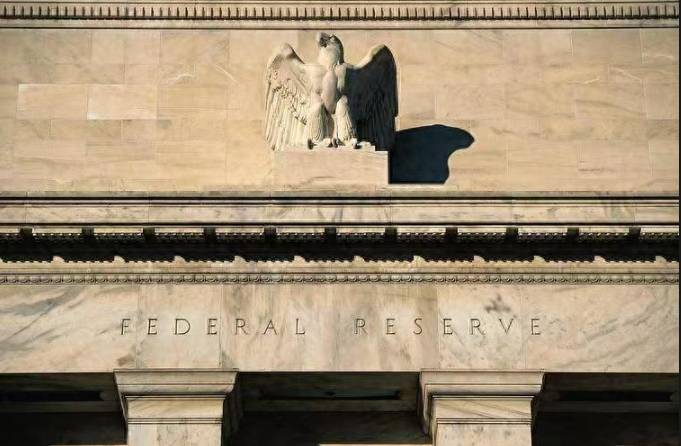
Thirdly, two new structural monetary policy tools were created - "Securities, Fund, Insurance Company Swap Facility" and "Stock Repurchase and Increase Re-lending", with quotas of 500 billion yuan and 300 billion yuan respectively, and it was clearly stated that the funds obtained can only be used for the stock market. Although this is not equivalent to asset purchases under the Federal Reserve's quantitative easing plan, the central bank's early disclosure of the relevant quotas can still be expanded, showing the determination to support the capital market. The market compares this to the famous battle of Federal Reserve Chairman Greenspan in 1987 to calm the market panic caused by "Black Monday" and the European Central Bank Chairman Draghi in 2012 to reverse the impact of the European debt crisis.
The speed at which the relevant measures were implemented exceeded expectations. For example, the most concerned measure to stabilize the real estate market - the reduction of existing mortgage loan interest rates, it is now clear that all banks will achieve batch adjustment before October 31. This will involve 50 million households and 150 million people, reducing household interest expenses by about 150 billion yuan per year on average. At the same time, it was also announced that the pricing mechanism for commercial personal housing loan interest rates will be improved, and the administrative restriction that the shortest repricing cycle must be one year will be canceled.
On the last trading day before the National Day holiday on September 30, the trading volume of the Shanghai and Shenzhen stock markets reached a record 2.59 trillion yuan. This once again confirms that what the market lacks is not funds, but confidence. It is the package of measures that exceeded expectations, allowing policies to once again take the lead in the market curve, achieving a strong rebound in the financial market under strong expectations and weak reality. This is an important enlightenment.
Another important enlightenment is that预案 is more important than prediction. The Central Political Bureau meeting held at the end of September pointed out that some new situations and problems have emerged in the current economic operation. This points out the main background for the aforementioned package of financial support policies and the subsequent incremental fiscal policies. At the same time, this also further indicates that uncertainty is the greatest certainty. This is not a special case in China. Federal Reserve Chairman Powell, when explaining the reason for the first 50 basis point rate cut in September, said that he did not see the U.S. employment data for the month before the last July interest rate meeting, resulting in a missed rate cut.Therefore, instead of predicting how future policies will affect and what the economic situation will be like, it is better to conduct scenario analysis and prepare contingency plans. This means setting thresholds for triggering various scenarios in advance and preparing a toolkit of policy responses for each scenario, rather than waiting for the relevant scenarios to occur before studying countermeasures. Especially for some policies with high market sensitivity, studying them at the last minute may lead to hesitation. There are also policies that require procedures; if authorization can be obtained in advance, they can be quickly launched once the preset conditions are triggered, which will enhance the policy response capability. This is also the essence of modernizing the national governance system and governance capabilities.

























Leave a Comment