Before you start reading, hit the "follow" button to stay connected with us, and don't miss out on the exciting content to come. Thank you for joining us!
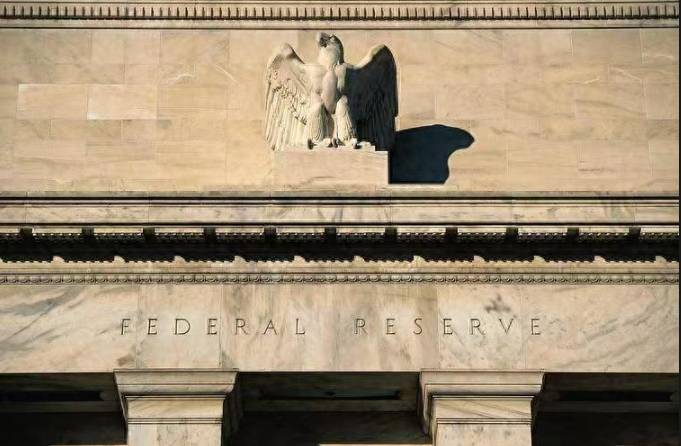
When the Federal Reserve unexpectedly announced a 50 basis point rate cut in September 2023, it caused a global stir in the capital markets. It's important to remember that since the United States began raising interest rates in 2022, the flow of global capital became very clear—large amounts of funds started pouring into the U.S. to enjoy the substantial returns from high interest rates. With the advent of the rate cut, the capital market seemed to enter a new set of rules.
The status of the U.S. dollar as the global reserve currency means that its interest rate policy almost affects every economy. The Federal Reserve uses rate hikes or cuts not only to control domestic inflation but also to influence the flow of global capital through interest rate differentials. The rate hike cycle that began in 2022 pushed rates from near-zero historical lows all the way up to 5.5%. Such a high-interest-rate environment attracted global capital back to the U.S., and for a time, dollar assets became the most popular investment targets worldwide.
High interest rates are not without costs. The U.S. manufacturing industry began to show signs of weakness in this environment, especially as high interest rates increased corporate financing costs, forcing many businesses to face the risk of narrowing profits or even shutting down. In addition, high interest rates significantly increased the debt burden on the U.S. government. By 2023, the U.S. national debt interest payments had climbed to historical highs. Against this backdrop, the Federal Reserve's rate cut was undoubtedly an "antidote" to these issues.
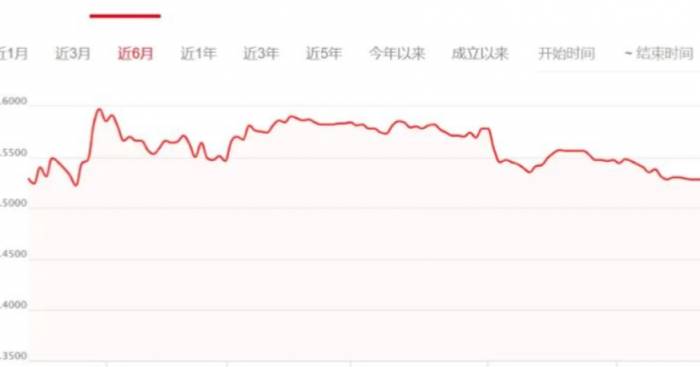
After the rate cut, capital sought out high-yield markets again, and China's stock market, with its relatively strong economic growth prospects, once again became a safe haven for global capital. From September to early October, China's A-share market experienced consecutive days of gains. In particular, international investment banks that had been skeptical of China's stock market, such as Goldman Sachs and Morgan Stanley, raised their expectations for the Chinese market, which undoubtedly further propelled the rise in China's stock market.
Moreover, the long-standing "China collapse theory" outside seemed to be shattered in this capital inflow. In fact, a series of growth-stabilizing policies introduced by China during this period, such as tax cuts and financial support, also provided policy support for the stock market's rise. This made the Chinese market more attractive in the eyes of global capital.
But the story didn't end there. Just as China's stock market was performing strongly, the U.S. suddenly released better-than-expected non-farm employment data. According to the data on October 4th, the U.S. added more jobs than the market had anticipated, indicating that the U.S. economy was recovering strongly. This data broke the previous market expectations of a weak U.S. economy, and capital began to reassess the potential of the U.S. market.
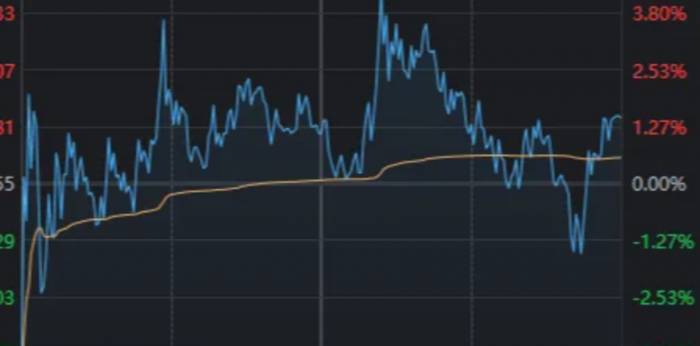
Subsequently, on October 9th, China's stock market began to adjust, while the U.S. stock market experienced a significant rise. Particularly, technology stocks and financial stocks performed exceptionally well. In contrast, European and Indian stock markets were impacted by the non-farm data and experienced a general decline.
Although the rate cut in September provided the market with a brief respite, the policy outlook of the Federal Reserve remains full of uncertainties. Federal Reserve key voter Daly publicly stated that the Federal Reserve may continue to cut rates in the future to maintain economic growth. However, the non-farm data in October challenged this expectation. According to the latest employment data, the U.S. economy does not seem as weak as the market expected, but instead shows strong resilience.Therefore, the market has begun to speculate whether the Federal Reserve will readjust its policy direction at the November meeting, or even raise interest rates again. If the Federal Reserve announces an interest rate hike, it would mean that the United States is returning to a tightening policy, and the global flow of capital may reverse once more. For the Chinese market, this is undoubtedly a new challenge.
If the United States raises interest rates again in the coming months, global capital will once again flood into the U.S. market, putting immense pressure on China's stock market. As many experts have pointed out, the domestic debt issues and manufacturing difficulties in the United States still exist, and high interest rates will only exacerbate these problems. Especially in the context of a slowing global economy, the United States' interest rate hike policy may have a negative impact on its allies, such as Europe and Japan.
From historical experience, the United States' strategy of harvesting global capital through interest rate hikes is not without examples of failure. This time, the game between China and the United States is not just a financial competition, but also a reshaping of the global economic landscape.
The current global capital market is in unprecedented uncertainty. The Federal Reserve's interest rate cuts and hikes have not only affected the domestic economy of the United States but have also profoundly influenced the flow and allocation of global capital. For China, seizing the opportunity of this round of global capital movement to further consolidate the momentum of economic growth may be the key to addressing future global economic challenges.













Leave a Comment