An event hailed by Tesla CEO Elon Musk as one that would "go down in history" had the public's expectations at an all-time high. However, when the curtain was raised, there was only a brief 20-minute theme introduction, which seemed somewhat hasty, with many questions left unanswered.
Since Tesla announced on April 5th of this year that it would hold a "Robotaxi Day" event, market sentiment has been extremely bullish, and Tesla's stock price has risen accordingly. As of the close of US stocks on October 11th, it had accumulated a 45% increase. Musk had previously stated that a shift towards autonomous driving and AI could potentially increase Tesla's valuation to $5 trillion, about seven times the company's current market value.
At around 11 AM Beijing time on Friday, October 11th, "Robotaxi Day" was finally held. Although the appearance of 20 Robotaxis (autonomous taxis) was eye-catching, analysts covering Tesla were almost unanimous in their view that the event lacked details, and the market and investors did not hear what they wanted to hear from Musk. There are at least three questions that Musk failed to answer: when will Tesla's Robotaxis be deployed, has there been any recent progress in Tesla's Full Self-Driving (FSD) technology, and when will the long-awaited low-cost vehicle be released.
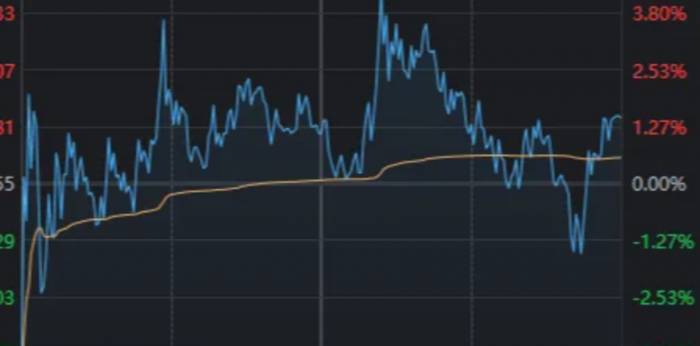
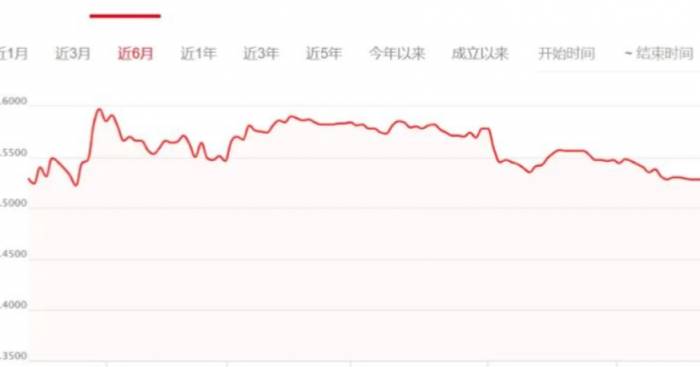
In the subsequent opening of US stock trading, Tesla plummeted by 8.78%, with nearly $70 billion of market value evaporating in a single trading day. Ride-hailing companies Uber surged by 10.81%, hitting a historical high during the trading session, and Lyft also rose by 9.59%, due to analysts stating that Tesla's (Robotaxi) lack of details alleviated competition.
On October 11th, Tesla's stock price plummeted by 8.78% in local time. Image source: Google Finance.
After the event, even Tesla's long-term bull and Morgan Stanley analyst Adam Jonas couldn't bear to watch. He exclaimed in his research report, "That's it? Disappointing and lacking in details." However, there were also those who were bullish. In an email to reporters, Wedbush Managing Director and Senior Equity Analyst Daniel Ives stated, "We strongly disagree with the notion that this event was disappointing, as we saw significant improvements in the Cybercab and humanoid robot Optimus. We believe that the launch of Cybercab and Optimus in the coming years could become major contributors to Tesla's financial performance."
Question One: The actual deployment timeline for Cybercab?
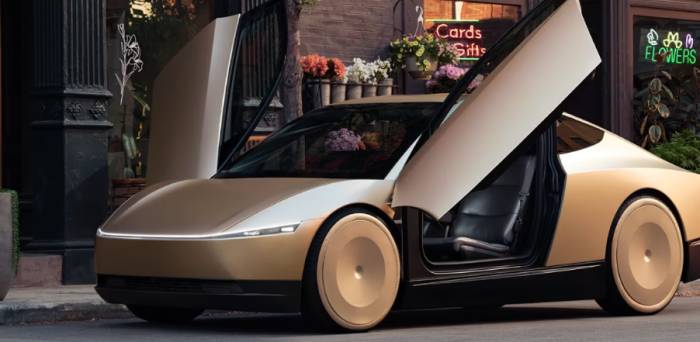
The event took place at a movie studio near Los Angeles. Musk stated on site that Tesla plans to start producing a Robotaxi named CyberCab in 2026 and to launch the operation of the fully autonomous driving feature FSD without human supervision in California and Texas, USA.
He further pointed out that CyberCab's production capacity will significantly increase in 2027 to form Tesla's RoboTaxi fleet. The cost of the vehicle will be less than $30,000.
However, Musk's presentation not only lacked technical details but also avoided discussing topics such as regulation or whether Tesla would own and operate its own Cybercabs.Image source: Tesla's official website
"Is that all? Disappointing and lacking in details," wrote Morgan Stanley's renowned automotive analyst and long-time Tesla bull, Adam Jonas, in a report to investors on Friday. Analysts from Wells Fargo also shared this view, stating that Tesla's Robotaxi is "dazzling, but lacks substance."
Deepwater Asset Management analyst Gene Munster also immediately expressed that while the appearance of the Cybercab vehicle is good, there is doubt about its launch timing, which may not be available on a large scale until 2027. "For those who want to invest in Tesla but are skeptical, this timeline is too far away."
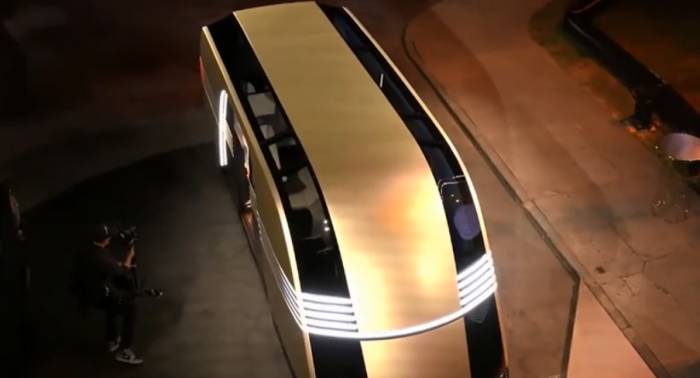
Munster also pointed out that although Tesla's autonomous vehicle Robovan is eye-catching, Musk did not inform the public when it would be released, and it might not be available until at least 2028.
Morgan Stanley analysts emphasized that Tesla faces challenges in expanding its autonomous taxi business, including the required technology, regulatory involvement, and the complexity of route and fleet management.
Question 2: What is the latest progress on FSD?
Most analysts believe that, considering regulatory hurdles and doubts about the safety of its autonomous driving technology, Tesla will need a few more years to launch Robotaxi.
Unlike other car companies that use lidar solutions, Tesla's FSD adopts an "end-to-end" pure vision solution, but Musk did not reveal any information about the latest progress of FSD at this press conference.
Jefferies analysts from the United States stated that Musk did not provide "verifiable evidence" of progress in Tesla's autonomous driving technology. They added that this "makes it difficult to assess the feasibility of the goals outlined by Musk at the press conference, as there is currently no precedent for achieving higher levels of autonomous driving using a vision-only method."
Goldman Sachs analysts said in a report, "We would not be surprised if Tesla's stock experiences selling in the coming weeks, as the momentum before the press conference will gradually fade."At the same time, Morgan Stanley believes that Musk failed to prove at the press conference that Tesla is an AI company. Morgan Stanley analyst Adam Jonas pointed out that Musk did not mention any details about the improvements to Tesla's FSD system, nor did he reveal details about Tesla's cooperation plans with Musk's AI company xAI.
Adam Jonas said that he has been looking for quantitative data on the improvements to Tesla's FSD and is also looking forward to the business strategy for regulated and unregulated ride-hailing services. In a report on Friday, he wrote that the press conference was "disappointing in many ways: lack of data on changes in FSD/technology, ride-hailing economy, and Cybercab launch strategy. Overall, we are disappointed with the content and details of Musk's speech. Therefore, we expect Tesla's stock price to face pressure in the later period."
Barclays analysts said that Thursday's press conference was more about showcasing Musk's vision for a fully autonomous driving future. The bank's automotive team wrote in a report, "As expected, like previous Tesla product launches, this press conference did not reveal details but emphasized Tesla's vision for growth in the AI/autonomous driving car field. We did not get any updates on the progress of FSD or data reflecting improvements to the FSD system."
Question three: When will the low-cost car come?
Analysts said before Tesla's press conference that they hope Musk can share information about the long-rumored low-cost car Model 2 at the meeting.
Previously, Musk has promised to launch a car with a starting price of about $25,000, and investors believe that this promise is crucial for Tesla to win new customers. At the same time, cheaper electric cars are key for Tesla to increase delivery volume and consume excess capacity at existing factories.
The reporter noticed that the market's expectations for Model 2 are not less than Cybercab, as Tesla's aging car models have obviously affected its sales. According to data from Wards Automotive, a provider of automotive industry data, Tesla's sales in the United States have decreased by nearly 10% year-on-year as of August this year, compared with a year-on-year growth rate of 25% for Tesla's sales in the United States in 2023.
However, it is a pity that Model 2 did not make an appearance, which has further cast doubt on Tesla's automotive sales prospects. If Tesla does not want its annual delivery volume to decline for the first time, it needs to deliver a record number of electric vehicles in the next few months.
Wall Street estimates that Tesla will deliver about 1.8 million cars in 2024, barely flat with 2023, far below the 2.3 million analysts predicted a year ago. Against this backdrop, if Tesla can launch the Model 2 with a price below $30,000, it will help to boost Tesla's sales again and expand the company's potential market.
CFRA Research analyst Garrett Nelson said in a report, "We are disappointed with the lack of details on Tesla's near-term product roadmap, and we believe that today's press conference does not help to change Tesla's mid-term profit outlook."Amidst Skepticism, Some Institutions Remain Bullish
In the midst of skepticism, some institutions have shown a bullish sentiment towards the content of Tesla's recent event.
Analysts at investment bank Piper Sandler believe that Tesla's "true believers" have "every reason to be excited" after this event. Bank of America analysts also stated in a report that the event "lived up to the hype," but the target of starting production in 2026 "may be overly optimistic."
Bank of America analysts reiterated their "buy" rating for Tesla, adding: "Interestingly, Musk indicated that the foundational AI technology for the humanoid robot Optimus is the same as that used in Tesla's electric vehicles, as the only difference between the two is their physical form. We believe this illustrates the fact that Tesla is no longer just a traditional car company. Although the financial impact of these potential new products is not yet clear, AI and robotics could be the main developmental path for Tesla over the next decade."
Daniel Ives, Managing Director and Senior Equity Analyst at investment bank Wedbush, also said in an email to reporters, "Both investors and short sellers are asking, where are the more details? Yes, we completely agree that, ideally, Musk and Tesla should spend more time on the details of the autonomous driving strategic vision. This could put pressure on Tesla's stock price on Friday. However, we strongly disagree with the notion that this event was disappointing, as we saw significant improvements in the Cybercab and the humanoid robot Optimus."
"We believe that this event was just a glimpse for the outside world into the future of Tesla and the next generation of transportation. From the Cybercab to Optimus, to the routes of unmanned fire departments in California and Texas by 2025... Musk presented a vision, we got up close to these cars, and ultimately believe this will mark Tesla's transition from an electric vehicle manufacturer to a broader AI/robotics/disruptive technology company. Although this will take time, we believe that the launch of the Cybercab and Optimus in the coming years could become major contributors to Tesla's financial performance and could account for 20% of total profit/margin before 2030," Ives added.
Disclaimer: The content and data in this article are for reference only and do not constitute investment advice. Please verify before use. Any actions taken based on this information are at your own risk.



Leave a Comment