Recently, the national economic policies have been actively implemented, enhancing confidence in China's economic prospects across various sectors. The A-share market has garnered global investor attention, with increased volatility as a result.
Investing has its patterns, allure, and ruthlessness, which should be fully understood. It is essential to maintain a good mindset and not let it affect normal life and work.
Investing is a process of cultivating one's mindset and enhancing cognition. Respecting and fearing the market, and continuous learning are necessary to enjoy the investment journey.
We have summarized nine major suggestions, hoping they will be helpful to stock investors.
1. View market fluctuations rationally, respect market laws, and avoid being swayed by emotions.
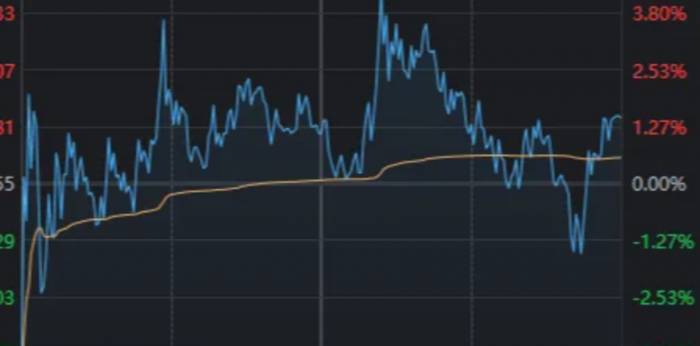
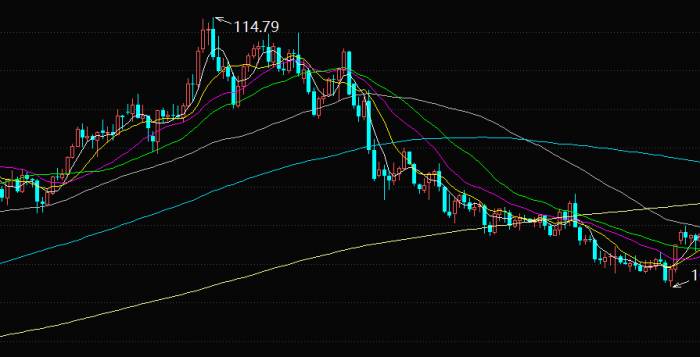
Markets rise and fall, and stock market fluctuations are normal. The legendary investor Warren Buffett once proposed the famous "Mr. Market" theory. "Mr. Market" reports a market price every day, which may be higher or lower than the intrinsic value of the stock. Stock price fluctuations are short-term phenomena, but in the long run, stock prices will eventually return to their intrinsic value. Bear markets often experience turbulence, and bull markets may have even greater fluctuations. No one can predict overly short-term market movements.
How to deal with market ups and downs?
Maintain rationality and calmness. The market is always full of uncertainty; do not let the rise and fall of the market lead your emotions. In the stock market, human emotions such as greed and panic are magnified infinitely, making it easy to make wrong decisions. Exiting at the slightest fluctuation and adding positions when the market rises again, this kind of constant churning is common but often leads to poor outcomes.
The most important aspect is directional judgment. Focus on finding good companies and waiting for the right timing. What goes up is risk, and what comes down is opportunity. True investors should be more cautious as good companies and stocks rise, and more optimistic as they fall. Buying at a low price is the hard truth. Buffett said, "I am greedy when others are fearful, and I am fearful when others are greedy."2 Invest with spare money, avoid a gambler's mentality, and do not blindly use leverage
Investing with spare money in the stock market is an important principle to ensure that it does not affect the quality of life in the short term, and to maintain composure, dignity, and patience. Some investors, upon seeing a bull market, are eager to invest all their family assets into the stock market, and even borrow money to trade stocks. This gambler's mentality, which hopes to achieve financial freedom through a bull market, not only affects physical and mental health, distracts from one's main job, and leads to constant monitoring of the market, severely impacting sleep and the quality of life; it also causes anxiety about gains and losses, with every rise and fall affecting one's nerves. If there is an urgent need for money and the stock market happens to be at a low point, one may have no choice but to sell at a loss and exit the market.
What constitutes spare money? According to the Standard & Poor's family asset quadrant diagram, family asset allocation can be divided into four parts: money for daily expenses, money for emergencies, money for investment, and money for preservation and appreciation. "Money for daily expenses" should be enough to cover 3-6 months of emergency funds for daily living expenses; "money for preservation and appreciation" aims to ensure that wealth does not shrink and to combat inflation, which can be allocated to stable products; "money for investment" aims to achieve high returns; "money for emergencies" can be specifically used for insurance to hedge against risks. Each person can adjust the proportions according to their own risk tolerance, but it is essential to keep enough cash for living expenses.
3 A bull market does not guarantee profits; avoid chasing rises and selling on falls, frequent trading, and constant churning
Graham, Buffett's teacher, had a famous saying, "A bull market is the main reason for ordinary investors to lose money." A bull market can create the illusion that one is a stock god, leading to aggressive operations, chasing rises and selling on falls. However, in reality, most investors operate fiercely, but the rise and fall of stocks depend entirely on luck. When stock investors chase rises and sell on falls, they often simply judge based on performance changes, which has a clear short-term characteristic. However, without a comprehensive analysis and judgment of the market and industry, the risk of chasing rises and selling on falls in the short term is very high because market hotspots change very quickly, making it difficult to time the market accurately to achieve excess returns. On the contrary, frequent buying and selling will generate high transaction costs.
Due to the dominance of retail investors and the characteristics of a policy-driven market, A-shares have always had the characteristic of short bull markets and long bear markets, with sharp rises and falls. A-shares have short bull markets and long bear markets, with an average duration of 12.99 months for the past 10 bull markets, but an average duration of 27.12 months for the 10 bear markets. In contrast, the 19 bull markets in the US stock market lasted an average of 43.68 months, while the 19 bear markets lasted an average of only 16.74 months.
A-shares are dominated by retail investors, which are more likely to amplify market fluctuations and trigger herd effects. There are a total of 211 million stock accounts in China's stock market, of which 210 million are individual investors, and retail investors hold about 30% of the market, which is a high level internationally. Retail investors are at a disadvantage in terms of professionalism, information volume, and capital volume, which exacerbates the emotional fluctuations in the A-share market. The lack of risk awareness, chaotic buying and selling decisions, and insufficient professionalism among retail investors lead to losses for retail investors in sharp rises and falls.
4 Changing cognition is key, and improving cognition is crucial; avoid acting on every rumor
Cognition change can lead to great wealth, and improving cognition is the key. Avoid acting on every rumor.Investing begins with changing one's perception. Some newcomers to the stock market are unsure of what to invest in and blindly trust so-called "insider information." They dare to make substantial purchases without even understanding what the company does. Some are unclear about basic trading hours and the T+1 system, hoping to win without effort. When they win, they attribute it to their own merits; when they lose, they blame others. As the saying goes, one can never earn money beyond their own cognition. Even if they get lucky once with this method, they will eventually pay it back with their own abilities.
The stock market is a comprehensive reflection of economic fundamentals, policy, capital, and sentiment. The classic framework for stock market analysis tells us that stock value is the discount of future cash flows. The numerator of stock valuation is affected by corporate earnings, requiring an understanding of the economy and corporate fundamentals. The denominator is the risk-free rate and risk premium, influenced by monetary policy and market sentiment. It is necessary to continuously update one's cognition to keep pace with the market.
Systematically learn the basic knowledge of the stock market, financial knowledge, and valuation principles to form your own stock market analysis framework. Avoid jumping to conclusions and treating investment as a game of luck, as it involves real money.
5. Act within your capacity and choose an investment method suitable for yourself within your circle of competence.
Even master-level individuals only earn money within their circle of competence. Warren Buffett is an expert in value investing and has proven with his impressive long-term investment performance that the academically claimed efficient market theory is invalid. The market is full of irrationality, animal spirits, and hormones. However, Buffett is an outsider in the field of macro hedging. Soros and Dalio are masters of macro hedging. Soros demonstrated an accurate understanding and bold actions in macroeconomics, public policy, and market behavior in his classic battles of shorting the British pound in 1992 and the Thai baht in 1997.
If investors have time and energy, they can participate in investments by making their own decisions. Experienced investors can directly invest by buying and selling listed companies. Alternatively, they can participate in investments by purchasing ETFs related to a concept sector or industry they identify as having opportunities.
If investors lack time and energy, it is recommended to choose professional institutions to participate in investments. By selecting mutual and private fund products, investors can delegate decision-making to fund managers with long-term excellent performance, good drawdown control, and superior returns in bull markets.
6. Diversify investments and don't put all your eggs in one basket.
"Do not put all your eggs in one basket" is an old saying, and its core idea is to reduce unsystematic risk, ensuring that the overall volatility of the investment portfolio does not become too high when a single asset or industry fluctuates. Modern portfolio theory also conveys the same meaning: holding multiple uncorrelated or negatively correlated assets can effectively reduce the risk of the investment portfolio without significantly reducing expected returns.
For ordinary investors, a reasonable allocation of different assets and different industries in the stock market can better balance risks. They can combine low-correlation assets, such as gold, bonds, and commodities, to enhance risk hedging effects. In terms of stock market industry selection, cyclical stocks are significantly affected by macroeconomic fluctuations, while defensive industries like essential consumer goods have relatively lower volatility.7. Maintain a long-term perspective and avoid changing beliefs based on short-term market fluctuations.
It is inadvisable to rely excessively on short-term market sentiment for investment decisions. When the market experiences a significant rise in volume, avoid blindly following the crowd; when there is a slight fluctuation and correction, do not hastily withdraw. Instead, assess whether there have been any fundamental changes in policy, fundamentals, and other factors.
Investing is a long-term endeavor. Do not let short-term market volatility distract you. Resist the temptation to chase gains and cut losses impulsively. Minimize the impact of short-term fluctuations and maintain a long-term view. Select good companies with good prices that have long-term growth potential and persist with long-term investments, which often yield better returns.
8. Avoid the disposition effect and let emotions dictate decisions. Practice rational stop-loss strategies and achieve steady profits.
The disposition effect is a crucial concept in investment decision-making, referring to investors' tendency to sell too early when they are in profit and their reluctance to cut losses when they are in a loss. In layman's terms, it is described as "not being able to hold onto gains and being unwilling to cut losses when incurring losses." The disposition effect essentially stems from people's aversion to losses. Short-term market fluctuations influence investors' decisions, leading to the "avoidance" of losses and the "premature realization" of profits.
To avoid the impact of the disposition effect, investors can focus more on analyzing the fundamentals of companies, financial statements, management, and other aspects, as well as economic trends and the tightness of macroeconomic policies. This approach helps to avoid making hasty decisions due to short-term fluctuations.
9. Avoid "selective attention" bias and conduct a comprehensive and objective assessment of the market and companies.
Selective attention refers to the tendency of people to focus on information that supports their own views while ignoring other information, leading to a one-sided understanding of the market and subsequent incorrect investments. For example, some stock investors complain, "As soon as I buy a stock, it falls, and as soon as I sell, it rises." Generally speaking, the market does not rise or fall based on individual will. This illusion arises precisely because of selective attention, which overlooks other circumstances.
To overcome the pitfalls of selective attention, investors should maintain a diversity of information channels and establish comprehensive data analysis capabilities. When making investment decisions, base them on multiple dimensions such as macroeconomic conditions, industry development, policy orientation, capital flows, and company performance, to form their own investment framework.
In conclusion, investing is a long-term practice that requires the accumulation of knowledge and the enhancement of one's character. The market carries risks, and investments should be made cautiously. Always maintain respect for the market, learn from it, and learn from investment masters. Humility can lead to success in all endeavors, while complacency often leads to failure. I wish everyone a steady and progressive journey in the world of investment.




























Leave a Comment