Today is Saturday, although the stock market is not open, the global capital's attention is still focused on China, because the press conference held by the State Council Information Office at ten o'clock this morning, the Ministry of Finance will introduce relevant fiscal policies, making a heavy global statement.
At present, the press conference has ended, the venue was full, and the amount of information was also relatively large. What is the situation of the incremental policy that everyone is concerned about? What impact does it have on China's capital market? Combining macro policies, let's talk about some of my personal views:
1. The Ministry of Finance made a statement, and the amount of information was relatively large. What are the most critical pieces of information?
Let's first talk about the issue of existing mortgage adjustments that everyone is concerned about. Last night, major banks began to announce that from the 25th, the interest rates on existing mortgages will be adjusted in batches, and customers do not need to apply. In other words, this time it is a batch automatic adjustment, which helps to reduce the pressure of mortgage loans and can be considered as the formal landing of the previous good news.
The six major state-owned banks took the lead in announcing, and today, major commercial banks also followed suit and released messages one after another, which was relatively fast.
Back to the focus of today, this press conference lasted for more than an hour, and the amount of information can be said to be relatively large. Many people may not have followed it, and I have summarized several key points that everyone is more concerned about:
(1) Regarding real estate, it was mentioned this time that special bonds will be used to purchase existing commercial housing to support and promote the real estate market to stop falling and stabilize.
Supporting the real estate market to stop falling has been mentioned before, and this time the incremental policy is mainly to use special bonds to purchase existing commercial housing, which is good news for the real estate sector.
In addition, allowing special bonds to be used for land reserves actually has a greater significance for alleviating local pressure and real estate debt pressure.
Overall, it is expected that the heavy benefits for the real estate market will continue to be released. Since it has been proposed to stop falling and stabilize, it may eventually continue to release incremental policies to achieve this effect.(2) It is proposed to increase the debt limit on a one-time basis on a larger scale to replace the existing implicit debt of local governments and to intensify efforts to support local debt risk resolution. (No specific figures were mentioned, does this mean it falls short of expectations?)
I believe this is the most important incremental information to focus on today because, prior to today, there were some messages on the internet suggesting that there might be specific incremental numerical scales, but today no clear data appeared. Does this mean it falls short of expectations?
From market discussions, many people say that the absence of numbers indicates it falls short of expectations. I think this view is one-sided. There are several key phrases that should not be overlooked:
In recent years, the largest effort, one-time increase, large scale, following legal procedures, greatly reducing the pressure on local debt issuance;
Although these sentences do not include specific numbers, they provide the market with a significant scope for imagination. At this time, the absence of numbers is actually the greatest positive.
Because if there were numbers, people would compare them, which would affect the market's emotional judgment. Now it is clear that the scale of this increase is the largest in recent years, and it is a one-time increase, not a gradual one;
The focus is on a large scale, and a large-scale increase requires a normal approval process, which means it needs to be approved by the People's Congress, and it is not a decision that a single department can make alone.
It is precisely because the scale involved is large that it needs to be announced after approval, which immediately opens up the situation. A small scale can be decided upon, but a large scale requires a process, which at least ensures a higher probability of exceeding market expectations this time.
Resolving local debt risks, at least alleviating external concerns about local implicit debt, the risk of local debt does not need to be worried about. Additionally, the mention of more resources for economic development indicates that the policy effort for full economic recovery in the next step is significant. As long as the policies are sufficient, the stock market will eventually rise.
(3) The central finance still has a larger debt capacity and room for deficit increase, what does this mean?This point can be considered the second key piece of information for today, where the potential for increasing the deficit was mentioned twice, which is quite a significant positive development.
Many people are unclear about how to understand the concept of debt capacity and deficit space. You can think of it as fiscal leverage. A fiscal deficit is formed only when fiscal expenditures exceed fiscal revenues. An increase in deficit space implies that the government will increase spending to stimulate the economy, potentially continuing to release liquidity into the market, which is a direct positive for the market.
Moreover, the proposal to raise the fiscal deficit is relatively rare, indicating that there is sufficient confidence to inject liquidity into the market. Once market liquidity improves, the stock market will also be a good recipient.
In summary, looking back at the release of this round of policy benefits, the stock market's rapid explosion, everything stems from everyone's expectations of policy benefits. The previous rapid surge in the stock market was a direct response to the policy expectations on September 24th and September 26th.
Next, everyone hopes that the Ministry of Finance will have more unexpected policies that will stimulate the stock market to move towards a long-term positive trend. Originally, on October 8th, the market began to expect more than expected news, but the overheated sentiment that day, coupled with the market's emergency cooling and the disappointment of expectations, affected the sentiment.
Then, on Wednesday, it was announced in advance that there would be news related to the Ministry of Finance on Saturday, which was also to give the market confidence expectations. Today, it has once again raised everyone's expectations for future incremental policies, which is a macro policy confidence guarantee.
2. Will next week become the second redemption of the bull market?
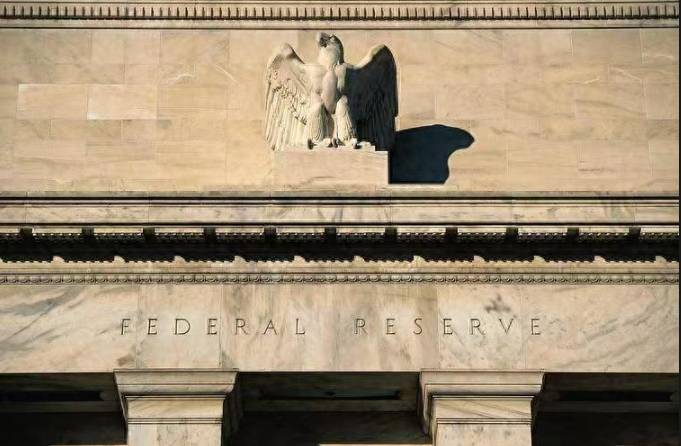
For the current A-share market, it is not just about launching a bull market, but more about a financial game. Since the end of September, many beneficial policies have been introduced, and the timing has been a mutual game between China and the United States. After the Federal Reserve cut interest rates, we continued to release benefits to attract international capital backflow. Then, the U.S. Department of Labor released the September non-farm data, which exceeded expectations, releasing a signal to slow down interest rate cuts, which is to tell those funds not to leave.Following the release of data by the Federal Reserve, the A-share market also experienced a rapid cooling of sentiment after the holiday. Last night, the United States released the September PPI data, which exceeded expectations, indicating that the economy remains robust, and U.S. stocks continue to reach new highs. Today, the Ministry of Finance released additional confidence, also aiming to enhance the competitiveness and confidence of Chinese assets.
These are all quite clever moves. After the Fed's rate cut, global capital markets are all vying to absorb the allocation of international funds. At this time, the U.S. will not easily allow capital to flow out, so the financial war will continue.
For our A-share market, on the one hand, it has to withstand the pressure of external financial games, and on the other hand, it also has to withstand some domestic institutions shorting and the blind herd effect.
Everyone will find that when the market rises, the effect of the rise is amplified, and many people choose to enter the market with leverage. But if it is not controlled, under the financial game between China and the U.S., these leveraged funds are likely to suffer heavy losses in the end.
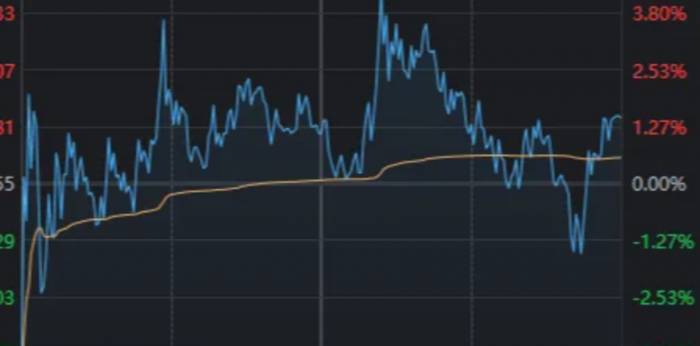
Therefore, I think everyone still needs to learn to maintain rationality. When the index rises by about a thousand points in a week, even if it is a bull market, such an increase is astonishing. With the news of the investigation of credit funds, the market sentiment immediately cooled down. It is very obvious that this wave of sudden increase in volume is very related to leveraged funds.
Now that the market sentiment has fallen, there is no need to follow some people who are leading the rhythm to amplify panic. Next week, A-shares are expected to enter a stop-and-rebound phase, but the crazy bull is no longer there, and it is necessary to return to normal operations.
This time, the de-leveraging started earlier, and the market fell back faster, but after the panic was released, it returned to the right track. I believe that A-shares will continue to reach new highs in the end.
Regarding many people saying that A-shares will have an A-kill, many people are just amplifying their statements with emotions. At present, it is to calm everyone down, but in terms of the trend, it still does not conform to the characteristics of A-kill. At this time, it is most important not to follow the outside world to chase rises and cuts.



























Leave a Comment