On Wednesday, the US Dollar Index continued to strengthen, reaching a two-month high, and ultimately closed up 0.39% at 102.89. The benchmark 10-year US Treasury yield closed at 4.0690%; the two-year US Treasury yield, which is more sensitive to monetary policy, closed at 4.0300%. The US stock market's Dow Jones Industrial Average closed up 1%, and the S&P 500 Index rose by 0.7%, both setting new closing highs, while the Nasdaq Composite Index gained 0.6%. Nvidia (NVDA.O) fell slightly, while Apple (AAPL.O) and Amazon (AMZN.O) both rose by more than 1%. The NASDAQ Golden Dragon China Index closed down by 1.29%.
Thursday Risk Alerts:
- At 20:30, the US will release the unadjusted September CPI data, with the annual CPI rate expected to record 2.3%, down from the previous value of 2.50%; the monthly rate is expected to record 0.1%, down from the previous 0.20%.
- At the same time, the US will announce the number of initial jobless claims for the week ending October 5th. The market expects an increase of 230,000 people, compared to the previous increase of 225,000.
- At 21:15, Federal Reserve Governor Lisa Cook will give a speech on "Entrepreneurship and Innovation."
- At 22:30, 2024 FOMC voter and Richmond Fed President Thomas Barkin will participate in a fireside chat.
- At 23:00, FOMC permanent voter and New York Fed President John Williams will give a speech and participate in a discussion on the economic outlook and monetary policy.
At the meeting on September 17-18, the Federal Reserve lowered the benchmark policy interest rate by 50 basis points. However, the meeting minutes indicated that the pace of future rate cuts would not be set by the initial substantial rate cut. The CME FedWatch Tool shows that the market now sees the likelihood of the Federal Reserve cutting rates by 25 basis points next month at 70.4%, while the probability of no rate cut has risen to 29.6%. Dallas Federal Reserve President Lorie Logan stated that although she supported the rate cut decision last month, considering the upward risks of inflation and the uncertainty of the economic outlook, she hopes that future rate cuts will be smaller.
Recent economic data, especially the strong non-farm employment report, have changed market expectations for Fed rate cuts. As US Treasury yields continue to rise, the opportunity cost of holding gold increases, putting pressure on gold prices.
Despite economic data putting pressure on gold prices, geopolitical tensions still provide some support for gold prices. Israel launched a new round of airstrikes on the southern suburbs of Beirut, Lebanon, in the early morning of the 10th, and issued an urgent evacuation warning to residents. The Israel Defense Forces stated that they would take action against specific targets. This tense situation has raised market concerns about the stability of the Middle East, thereby driving investors to seek gold as a safe-haven asset.Against this backdrop, the market is still closely monitoring the upcoming release of the U.S. Consumer Price Index (CPI) and Producer Price Index (PPI) data, which will provide important clues for the future interest rate outlook. In addition, changes in the number of initial jobless claims in the United States will also attract the attention of investors.
Dallas Fed President Logan emphasized in her recent speech that future rate cuts should be gradual to better balance the dual mandate objectives of the Federal Reserve. She pointed out that the upside risks to inflation still exist, especially against the backdrop of geopolitical tensions and supply chain issues. Logan's speech indicates that the Federal Reserve needs to maintain flexibility in its future policy adjustments and be willing to adjust according to economic developments.
The minutes of the Federal Reserve meeting showed that the vast majority of policymakers supported a 50 basis point rate cut in September, but did not preset the path for future rate cuts. This cautious attitude reflects the different views within the Federal Reserve on the economic outlook, especially in the face of constantly changing economic data and geopolitical risks.
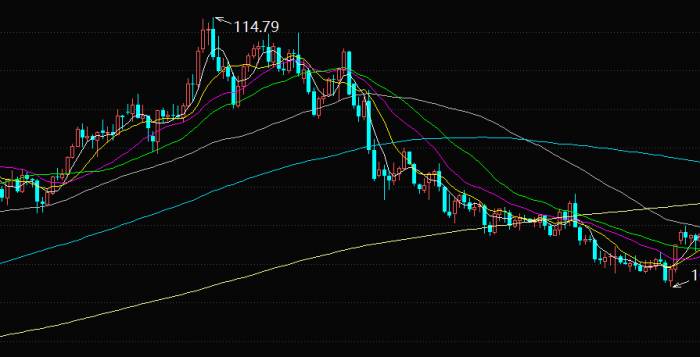
Gold prices were weighed down by the rise in the U.S. dollar to a new high of more than a month and a half, as well as the weakening expectations for a substantial rate cut by the Federal Reserve in November. U.S. Treasury yields hit a new high of more than two months, and gold prices continued to weaken on Wednesday as expected, marking the sixth consecutive day of decline. Today, focus on the 4-hour pressure area above, and after the gold price falls, pay attention to the performance of the 4-hour support area below.
At the same time, investors need to pay close attention to the upcoming economic data releases, especially CPI and PPI. These data will help investors judge inflation trends and further affect the direction of the Federal Reserve's policy. In addition, the market will also pay attention to the speeches of Federal Reserve officials and their implications for future interest rate policies.
According to the latest data released by the U.S. Energy Information Administration (EIA), U.S. crude oil inventories increased by 5.8 million barrels last week, to 422.7 million barrels, while the original expectation was an increase of only 2 million barrels. Although the rise in inventories usually puts pressure on oil prices, the increase in inventories was lower than the estimate of the industry organization American Petroleum Institute (API), which to some extent eased the downward pressure on oil prices. In addition, the decline in gasoline and distillate oil inventories was greater than expected, also providing some support for oil prices.
The United States is facing the threat of Hurricane Milton, which is expected to make landfall in Florida within a few hours. The storm has led to an increase in gasoline demand, with about a quarter of gas stations running out of supply, which to some extent supports oil prices. The extreme weather brought by the hurricane may cause damage to oil and gas infrastructure, further affecting the supply of oil in the United States.
The report from the U.S. National Hurricane Center shows that Milton may bring storm surges of up to 9-13 feet and rainfall of 6-12 inches in some areas, with local rainfall possibly reaching 18 inches. The impact of this extreme weather on the oil and gas industry has not yet fully emerged, but the market's concerns about its potential impact are intensifying.
The market's expectations for the Federal Reserve not to cut interest rates in November have heated up, leading to a continuous rise in the U.S. dollar index, which touched a new high of 102.93 on Wednesday, the highest since August. This strong U.S. dollar has put additional pressure on crude oil prices denominated in U.S. dollars. Although oil prices were supported by the situation in the Middle East and the impact of Hurricane Milton, the impact of the strong U.S. dollar cannot be ignored.
Previous data showed that U.S. crude oil inventories rose, and oil prices fell nearly 3% at one point during trading on Wednesday, but the risk of Iran's supply being disrupted by conflicts in the Middle East and the impact of Hurricane Milton in the United States limited the decline. Currently, the rise in crude oil prices has broken through the pressure area of the 1-hour downtrend line. Today, focus on the support area formed after the breakthrough of the 1-hour downtrend line below. After adjusting and stabilizing, consider going long on crude oil in the short term.In the current market environment, investors need to pay attention to the following aspects: First, the upcoming release of the US September CPI data will have an impact on the Federal Reserve's monetary policy; second, the changes in the number of initial jobless claims in the United States are also an important indicator of economic health. In addition, changes in geopolitical situations, news related to hurricanes in the United States, and speeches by Federal Reserve officials will also be significant factors affecting the market.



























Leave a Comment